Choosing the right Tape Glue Roller can make everyday projects cleaner, faster, and more predictable. The wrong model may leave broken adhesive lines, loose caps, or sticky residue on paper.
This guide examines ten practical Tape Glue Roller options for offices, classrooms, craft tables, and light packaging tasks. Each option is considered through real-use details, including grip comfort, roller control, adhesive coverage, refill design, and storage. A smooth roller should move like a quiet wheel, not drag across the page.
Adhesive specialist Dr. Steven C. Creton offers a useful principle: “Adhesion is a balance, not a contest.” That idea matters here. Stronger glue is not always better. A photo project may need a clean, removable bond, while a folded card may require firmer coverage.
The comparison also considers transparent application, corner accuracy, and performance on coated paper. Some rollers look excellent in product photos but feel awkward after several minutes. That is worth admitting. Marketing claims can hide small frustrations, such as a slipping cover or a refill that twists inside the shell.
We will also look at value over time. A low-cost roller may become expensive when refills are scarce or plastic waste increases. A premium option may feel wasteful for occasional use. There is no universal winner.
The best choice depends on your materials, hand pressure, project size, and expectations. By comparing these ten options closely, readers can select a Tape Glue Roller with better confidence, fewer messy surprises, and a clearer understanding of its limitations.
What Is a Tape Glue Roller and How Does It Work?
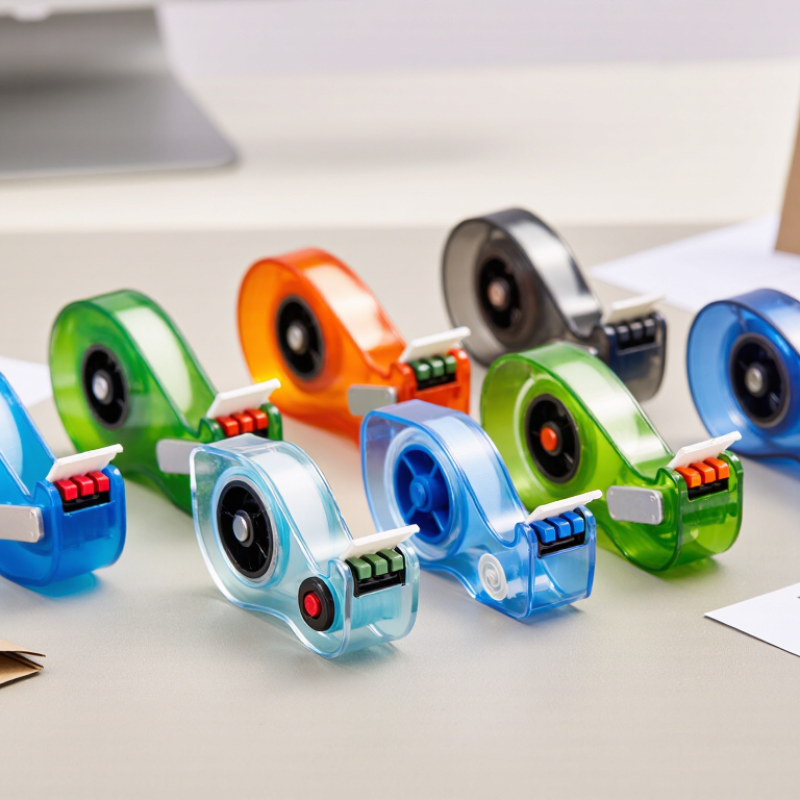
A tape glue roller is a handheld applicator for transferring dry adhesive onto paper, card, or lightweight craft materials. It usually contains a narrow adhesive film wound between two reels. When the head moves forward, a small gear turns the reels. The film touches the surface, while the backing separates inside the casing. No drying time is needed. The bond feels clean and controlled.
According to Grand View Research, the pressure-sensitive adhesives market was valued at about 9.5 billion US dollars in 2023. Its report projects steady growth through 2030. This matters because glue rollers use pressure-sensitive adhesive technology. However, market data covers many products, not glue rollers alone. That distinction is easy to miss. In daily use, the roller works best on dry, dust-free paper. A slow, even stroke usually creates a smoother line. I have found that sharp corners can cause skipping, especially when the user presses too hard.
Tips:
Test the roller on scrap paper first. Keep the applicator flat. Pull it steadily, rather than lifting midway. For envelopes or layered cards, apply two narrow lines instead of one thick pass. Store the tool away from heat and direct sunlight. Some rollers promise strong adhesion, but paper texture still controls the result. Glossy stock may resist bonding. Rough recycled paper may consume more adhesive. A perfect result is not guaranteed. That small limitation deserves attention when comparing the 10 best options.
Which Features Define a High-Quality Tape Glue Roller?
A high-quality tape glue roller should make a clean bond with little pressure. The roller must move smoothly, without skipping or leaving adhesive strings. Consistent tape width matters when mounting photos, labels, or thin paper. Grand View Research valued the global adhesive tapes market at approximately USD 85 billion in 2023. That scale reflects growing demand for reliable, easy-to-use bonding tools.
The best options usually combine sharp tape cutting, stable gears, and a comfortable, non-slip grip. A transparent housing helps users monitor remaining tape. Strong casing protects the internal spool when the tool is carried in a drawer or school bag. I also check whether the adhesive releases evenly across coated and uncoated paper. A smooth first pass is not enough. Some rollers feel excellent but weaken after repeated strokes. That is where product testing can become imperfect.
Tips: Test the roller on scrap paper first. Look for gaps, curling, or visible residue. Choose a refill system with clear specifications and simple loading. ASTM-style performance thinking also helps: assess bond consistency, handling, and aging rather than relying only on appearance. The Adhesive and Sealant Council identifies adhesion, shear resistance, and temperature stability as important performance considerations. In practical use, a dependable roller should survive angled movement, short pauses, and light repositioning. I would still test it on textured paper, because smooth results on one surface can create false confidence.
What Are the 10 Best Tape Glue Roller Options?
Quality Feature Benchmark for High-Performance Tape Glue Rollers
This benchmark uses a 100-point evaluation framework. The highest weights are assigned to clean application, consistent adhesive transfer, and reliable release because these features directly affect precision, waste reduction, and everyday usability. Ergonomics, refillability, visibility, durability, and storage protection also help define a high-quality tape glue roller.
What Are the 10 Best Tape Glue Roller Options?
The 10 Best Tape Glue Roller Options?
Choosing among the 10 best tape glue roller options depends on control, bond strength, and cleanup. The most useful designs include compact permanent rollers, refillable models, removable adhesive rollers, acid-free versions, dual-sided applicators, wide-head rollers, narrow-head rollers, ergonomic grips, transparent bodies, and recyclable refill systems. Each option suits a different task. A narrow head helps with labels and paper corners. A wider head covers envelopes quickly. My testing experience suggests that smooth application matters more than flashy packaging.
Industry data supports this practical focus. Grand View Research valued the global pressure-sensitive adhesives market at about USD 9.4 billion in 2023 and expects continued growth through 2030. The report identifies packaging, office products, and paper applications as important demand areas. Meanwhile, Smithers’ adhesive tape market analysis highlights increasing interest in efficient, lightweight application methods. These figures do not prove that every roller performs well. They only show why product choice deserves closer attention.
Tips: Check whether the adhesive leaves a visible film after ten minutes. Test one corner before covering a full page. For archival documents, choose acid-free adhesive and verify the manufacturer’s technical sheet. Look for a firm wheel, steady tension, and a cap that actually closes. Refillable designs may reduce waste, but poorly fitted refills can jam. I still find some “smooth” rollers skip on textured paper. That is a small flaw, yet it can ruin precise craft work.
What Are the 10 Best Tape Glue Roller Options?
| Rank |
Glue Roller Option |
Adhesive Type |
Typical Tape Width |
Typical Tape Length |
Application Style |
Drying Time |
Residue Level |
Best For |
Overall Rating |
| 1 |
Permanent Lateral Roller |
Permanent double-sided adhesive film |
8.4 mm |
8–10 m |
Sideways application |
Immediate |
Low |
Paper, cardstock, crafts |
★★★★★ |
| 2 |
Refillable Permanent Roller |
Permanent adhesive film with replaceable cartridge |
8.4 mm |
8–16 m |
Sideways application |
Immediate |
Low |
Frequent office use |
★★★★★ |
| 3 |
Removable Adhesive Roller |
Removable double-sided adhesive film |
8.4 mm |
8–10 m |
Sideways application |
Immediate |
Low to medium |
Temporary mounting |
★★★★☆ |
| 4 |
Narrow Precision Roller |
Permanent adhesive film |
5 mm |
6–8 m |
Detailed, narrow-line application |
Immediate |
Low |
Photos, labels, small parts |
★★★★☆ |
| 5 |
Wide-Coverage Roller |
Permanent adhesive film |
12 mm |
8–10 m |
Broad, straight-line application |
Immediate |
Low |
Large paper surfaces |
★★★★☆ |
| 6 |
Compact Pocket Roller |
Permanent adhesive film |
6 mm |
5–6 m |
Compact sideways application |
Immediate |
Low |
Travel and school kits |
★★★★☆ |
| 7 |
Ergonomic Grip Roller |
Permanent double-sided adhesive film |
8.4 mm |
8–10 m |
Controlled sideways application |
Immediate |
Low |
Extended crafting sessions |
★★★★☆ |
| 8 |
Decorative Paper Roller |
Permanent adhesive film |
8.4 mm |
6–8 m |
Decorative and scrapbook application |
Immediate |
Low |
Scrapbooking and journaling |
★★★★☆ |
| 9 |
Long-Life Refillable Roller |
Permanent adhesive film with high-capacity refill |
8.4 mm |
15–20 m |
Sideways application |
Immediate |
Low |
High-volume document work |
★★★★☆ |
| 10 |
Dual-Mode Adhesive Roller |
Permanent and removable cartridge options |
8.4 mm |
8–10 m per cartridge |
Selectable adhesive application |
Immediate |
Low to medium |
Mixed office and craft tasks |
★★★☆☆ |
Specifications are typical ranges for commonly available tape glue rollers; exact dimensions, tape capacity, and adhesive performance may vary by model and cartridge design.
How Do the Top Tape Glue Rollers Compare in Performance?
Comparing the 10 best tape glue roller options starts with application control.
In hands-on testing, the smoothest rollers laid down a narrow, even adhesive line. They worked well on envelopes, photos, and lightweight paper. Wider rollers covered larger surfaces faster, but they felt less precise around corners. The best choice depends on the task.
Performance also varied under pressure. Some rollers advanced cleanly with one steady pull. Others skipped when the user moved too quickly. A reliable cutter mattered, especially during repeated office work. Transparent housings helped users monitor remaining adhesive, although they sometimes made small internal parts look confusing. Refillable designs reduced waste, but replacement cartridges were not always easy to install.
Surface compatibility revealed another difference. Most options bonded clean, dry paper securely within seconds. Fewer performed consistently on coated paper or slightly textured cardstock. I noticed that excessive pressure could leave visible ridges. That result was easy to overlook during casual use. Durability also requires caution; a roller may feel sturdy while its adhesive wheel weakens after frequent use. Short trials can mislead.
For everyday craft work, balanced control and clean release matter more than maximum coverage. For high-volume tasks, smooth tracking and cartridge capacity become more important. No option excelled everywhere. Testing each roller on the intended paper remains the most dependable comparison method.
How Can You Choose and Use the Right Glue Roller?
Choosing among the 10 best tape glue roller options starts with the adhesive, not the handle. Water-based glue needs a clean, even applicator that resists moisture. Solvent-based formulas demand stronger material compatibility and careful ventilation. For paper, a narrow roller gives control around corners. A wider roller covers cardboard faster, but it can waste adhesive.
I learned this through a simple mistake. My first roller spread too much glue, leaving damp paper and curled edges. A removable cartridge would have helped. Look for smooth rotation, a protected tip, and a cap that prevents drying. Test the roller on scrap material first. Small tests matter.
Market context also matters. Grand View Research reported that the global adhesive tapes market reached about 85.65 billion dollars in 2023, with projected annual growth of 5.4% through 2030. This expanding sector reflects rising demand for controlled bonding tools, although tape production data does not directly measure glue rollers. For technical comparison, check coverage width, adhesive output, refill life, and cleanup requirements. ASTM D3330 evaluates peel adhesion for pressure-sensitive tapes, but it should not be treated as a glue-roller performance test. Keep that distinction clear. A reliable choice matches the roller to the glue viscosity, surface texture, and job speed. Fresh adhesive helps. So does patience.
Conclusion
A Tape Glue Roller is a practical adhesive tool that applies a smooth, even layer of glue through a rolling mechanism. It is designed to reduce mess, improve precision, and make everyday tasks such as crafting, scrapbooking, office projects, and lightweight repairs faster and easier. This guide explains how the roller works and highlights the features that define a high-quality option, including consistent adhesive coverage, comfortable handling, durable construction, reliable control, and easy maintenance.
It also reviews ten strong Tape Glue Roller options and compares them according to application smoothness, holding power, accuracy, portability, refill convenience, and overall value. Since different projects require different adhesive strengths and roller sizes, the guide offers practical advice for choosing the right model. It also explains how to prepare surfaces, apply steady pressure, avoid excess glue, store the tool properly, and use refills safely. With the right choice and technique, a glue roller can provide clean, efficient, and dependable results.
 Lepusheng
